



Breathing is something we often take for granted, but in a medical setting, the ability to delivre oksijèn effectively can be the difference between life and death. For procurement managers and healthcare professionals, understanding the subtle yet vital differences between Aparèy livrezon oksijèn is crucial. It is not just about buying a plastic tube; it is about securing a lifeline. Whether you are stocking an emergency room or a respiratory ward, knowing when to use a Mask ki pa Peye-rebreather kont yon Mask figi senp ou kanil nan nen ensures that patients receive the precise Kantite oksijèn they need for recovery.
This article dives deep into the mechanics of Terapi oksijèn. We will explore the specific functions of the Ki pa Peye-REBREATH, the role of the sak rezèvwa, and why the yon sèl-fason valv system is a game-changer in acute care. We will also clarify the confusion surrounding types of oxygen masks, such as the pasyèl rebreather ak la venturi mask. By the end of this read, you will have a comprehensive understanding of how to select the right oxygen equipment to maintain high standards of safety and efficiency in your healthcare facility.
What exactly is a non-rebreather mask and how does it deliver oxygen?
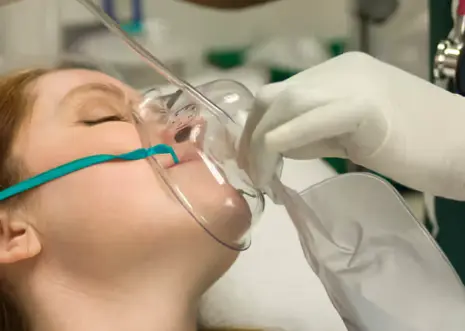
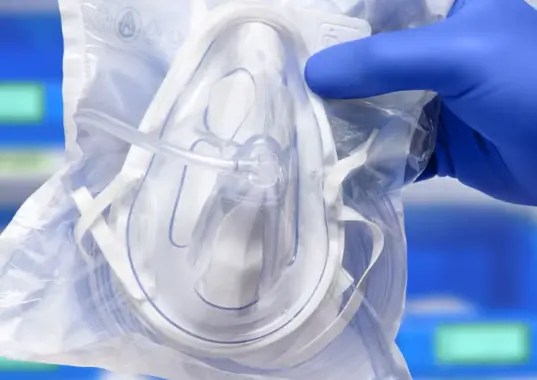
A Mask ki pa Peye-rebreather, often abbreviated as NRM, is a specialized medical device used in emergencies to deliver a Segondè konsantrasyon nan oksijèn. Unlike standard masks, a Ki pa Peye-REBREATH is designed to provide the patient with nearly pure oxygen. It consists of a mask that covers the nose and mouth, attached to a sak rezèvwa, and connected via tib to an Pwovizyon pou oksijèn source. The primary goal of this mas is to ensure that when the patient takes a breath, they are inhaling oxygen that is fresh and potent, rather than a mix of room air and medical gas.
Nan egi situations, such as trauma or cardiac events, a patient’s nivo oksijèn san can drop dangerously low. Here, a standard Senp mask might not be enough. The non-rebreather mask allows for the delivery of concentrations anywhere from 60% to 90% or higher, depending on the fit and to koule. This capability makes it an indispensable tool for healthcare providers working in critical care or emergency transport. As a manufacturer at ZhongXing Medical, we ensure our masks are crafted from soft, medical-grade PVC to ensure a tight seal, which is essential for the device to function correctly and deliver that vital extra oxygen.
How does the reservoir bag function to provide a high concentration of oxygen?
A sak rezèvwa is the defining feature of both the Ki pa Peye-REBREATH ak la Pasyèl mask rebreather. It hangs below the face piece and acts as a holding tank for fresh oxygen. When the koule oksijèn is turned on—typically from an tank oksijèn or a wall outlet—the gas fills this bag. When the patient breathes in, they draw oxygen directly from this bag. Because the bag contains 100% oxygen, the fraksyon nan oksijèn enspire (FiO2) is significantly higher than what a patient would get from air around them.
It is vital that the bag filled with oxygen remains inflated, or at least does not fully collapse during inhalation. If the to koule is too low, the bag will deflate completely, and the patient might struggle to breathe or pull in outside air, defeating the purpose of the high-concentration therapy. This is why you will see nurses and respiratory therapists constantly checking the bag. A properly functioning sak rezèvwa ensures that every breath contains a massive dose of oxygen, which is critical for rapidly correcting hypoxemia (low blood oxygen).
Why are the valves on a non-rebreather mask critical for patient safety?
The magic of the Ki pa Peye-REBREATH lies in its valve system. A standard Mask ki pa Peye-rebreather typically has several one-way valves—usually three. There is one vav ant la sak rezèvwa and the mask, and two exhalation valves on the side ports of the mask (though sometimes only one is used for safety reasons). The yon sèl-fason valv located between the mask and the bag allows oxygen to flow into the mask when the patient inhales but prevents ekspire lè from flowing back into the bag. This ensures the oxygen in the bag remains pure and undiluted by carbon dioxide.
A valves on a non-rebreather mask located on the sides serve a different purpose. During ekzalasyon, these flaps open to let exhaled gases escape into the room. Crucially, when the patient breathes in, these valves prevent chanm lè from entering the mask. This isolation is what allows the konsantrasyon oksijèn to remain so high. If these valves were missing or malfunctioning, the patient would pull in oxygen in the air (which is only 21% oxygen), diluting the therapy. This precise control of airflow is what separates a high-quality Ki pa Peye-REBREATH from lesser Aparèy livrezon oksijèn.
Ki diferans ki genyen ant yon rebreather pasyèl ak yon mask ki pa rebreather?
To the untrained eye, a pasyèl rebreather ak yon Ki pa Peye-REBREATH look almost identical. Both have a mask covers the face and an attached reservoir bag. The difference lies in the valves. A Pasyèl mask rebreather usually lacks the yon sèl-fason valv between the mask and the bag. This allows the first third of the patient’s ekspire lè to return to the reservoir bag. You might ask, "Why would we want them to re-breathe used air?"
The answer lies in anatomy. The first portion of air you tchòp comes from the "dead space" in the ajan—the windpipe and bronchi—where no gas exchange has taken place. This air is still rich in oxygen and has not yet picked up much gaz kabonik. By allowing this specific portion of ekspire lè to mix with the fresh oxygen in the bag, the pasyèl rebreather conserves oxygen supplies while still delivering a moderate-to-high concentration (usually 40-70%). It is a step down from the Ki pa Peye-REBREATH in terms of intensity but is useful in specific clinical scenarios where 100% oxygen isn’t necessary, but Siplemantè oksijèn is still required.
How does a simple face mask compare to high-flow oxygen delivery devices?
A Mask figi senp (oswa Senp mask) is a basic device used for patients who need more oxygen than a cannula can provide but less than a Ki pa Peye-REBREATH. It does not have a sak rezèvwa or complex valves. It simply sits over the nen ak bouch and connects to the oxygen tubing. Because it has open holes on the sides, chanm lè naturally mixes with the koule oksijènak ekspire lè escapes easily.
A Senp mask typically delivers an konsantrasyon oksijèn of 35% to 50% at flow rates of 5 to 10 liters per minute (LPM). It is generally used for patients who are stable but need a boost. However, it cannot deliver the Segondè konsantrasyon nan oksijèn that a non-rebreather mask allows. In emergency settings, relying on a Mask figi senp for a patient in severe respiratory distress could be a mistake. The Ki pa Peye-REBREATH is the superior choice when the goal is to maximize oxygen intake rapidly. For general post-operative recovery, however, the Senp mask is often sufficient and more comfortable.
For versatile respiratory solutions, consider our Jetab cheve medikal kap 21 pous file-boundedcap jetab (Note: while this is a cap, we provide a full suite of OR disposables) or our specific respiratory lines like the Aspirasyon medikal konekte tib 1.8mm ak Yankuer to support airway management.
When is a nasal cannula used instead of a mask that covers the nose and mouth?
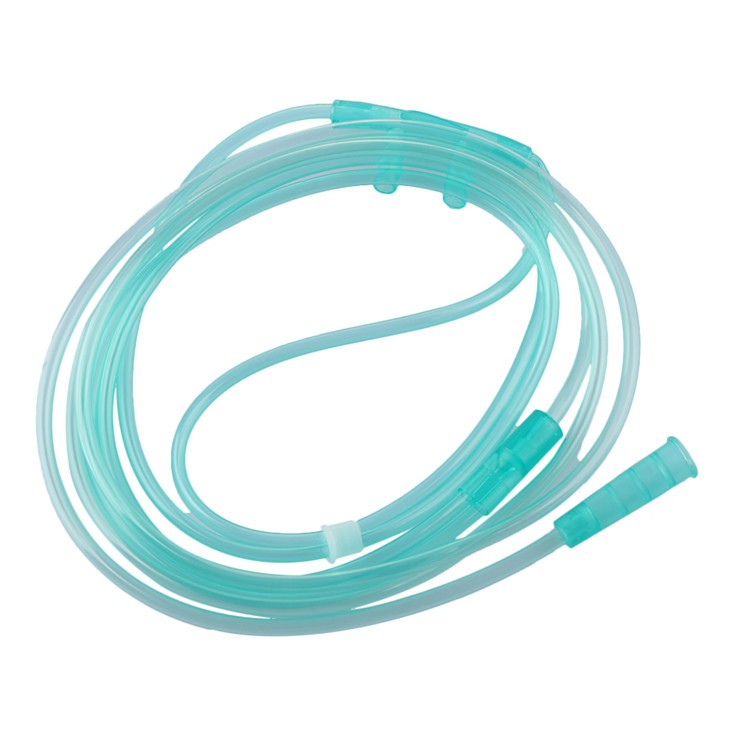
A kanil nan nen is the most common and least intrusive of all livrezon oksijèn methods. It consists of a tube with two small prongs that sit inside the trou nen. It is ideal for patients who are stable and require low levels of oxygen—typically 1 to 6 liters per minute. Because it does not cover the face, patients can eat, drink, and speak easily, which makes it the standard for long-term care or terapi oksijèn lakay ou.
However, a cannula has limitations. It cannot deliver high konsantrasyon oksijèn effectively. If you crank the to koule up too high on a kanil nan nen, it dries out the nasal passages and becomes painful. It is not suitable for egi emergencies where nivo oksijèn san have plummeted. In those cases, upgrading to a mask that covers the nose and mouth, like a venturi mask ou Ki pa Peye-REBREATH, is mandatory. For patients with chronic lung conditions like COPD, the precision of a venturi mask or the low flow of a cannula is often preferred over the high-intensity nrm to prevent suppressing their respiratory drive.
We offer Jetab PVC Nasal Oksijèn Cannula Tib pou tibebe ak granmoun sizes, ensuring a comfortable fit for every patient demographic.
Why is the non-rebreather mask preferred for carbon monoxide poisoning and smoke inhalation?
Anpwazònman monoksid kabòn ak rale lafimen are critical medical emergencies where every second counts. Carbon monoxide binds to hemoglobin in the blood much more aggressively than oxygen does, effectively starving the body’s tissues of oxygen. To reverse this, you need to flood the system with the highest possible konsantrasyon oksijèn to force the carbon monoxide off the hemoglobin.
This is the textbook scenario for a Mask ki pa Peye-rebreather. By setting the to koule to 15 LPM (flush) and using a Ki pa Peye-REBREATH, healthcare providers can deliver an fio2 close to 1.0 (100% oxygen). This drastically reduces the half-life of carbon monoxide in the blood. A Senp mask ou cannula simply cannot provide enough oxygen pressure to be effective in these cases. The one-way valves on a non-rebreather are essential here to prevent the patient from breathing any chanm lè, maksimize a livrezon oksijèn to the starving tissues.
What flow rate is required to keep the reservoir bag filled and effective?
Sèvi ak yon Ki pa Peye-REBREATH requires careful monitoring of the koule oksijèn. A common mistake is putting the mask on a patient without turning the flow up high enough. To function correctly, the to koule pou yon Mask ki pa Peye-rebreather typically needs to be between 10 and 15 liters per minute. The visual cue is the bag: the sak rezèvwa should remain at least one-third to one-half full when the patient takes a deep aspire.
If the bag collapses completely during inhalation, the patient is "outrunning" the flow, meaning they aren’t getting enough gas. This can feel suffocating and forces the safety valves to open, letting in room air and lowering the nivo oksijèn. Healthcare providers must ensure the Pwovizyon pou oksijèn is sufficient to keep the bag filled. Bon kalite tib and connectors, such as those manufactured by ZhongXing, ensure that the flow remains consistent and that there are no leaks in the system that could drop the pressure.
Can patients feel claustrophobic when wearing a mask that covers the nose?
One of the challenges with any mask covers the face is patient comfort. A Mask ki pa Peye-rebreather fits snugly over the nen ak bouch to create a seal. For some patients, especially those already struggling to breathe or experiencing anxiety, this can make them feel claustrophobic. The sensation of having rubber or plastic strapped to the face can be distressing.
A rebreather ak non-breather masks can be hot and limit communication. However, in emergency situations, this discomfort is a necessary trade-off for life-saving Terapi oksijèn. To mitigate this, high-quality masks are designed with transparent, soft materials to reduce the feeling of confinement. Nurses and doctors (the caregiver) often coach the patient through the process to keep them calm. If a patient absolutely cannot tolerate the mask, clinicians might switch to a high-flow nasal cannula system if available, but for rapid resuscitation, the mask remains the gold standard.
Check out our Medikal mask figi chirijikal options for general protection, which feature breathable designs to minimize discomfort, similar to our approach with respiratory masks.
How do you choose the right oxygen delivery device for acute care situations?
Chwazi a right oxygen device is a dynamic process based on the patient’s condition. For a patient who is breathing spontaneously but has severe hypoxemia (low oxygen), the Mask ki pa Peye-rebreather is the immediate choice. It is the "big gun" of non-invasive livrezon oksijèn. If the patient is stable but needs a little help, a kanil nan nen is used. If they need precise concentrations (like in COPD), a venturi mask is selected because it uses an adapter pou entrain specific amounts of air.
For procurement managers like Eleanor, ensuring a facility has a mix of these types of oxygen devices is vital. You cannot treat a smoke inhalation victim with a cannula, and you wouldn’t use a Ki pa Peye-REBREATH for a stable patient going home. Quality assurance is also key; cheap masks with faulty tiyo can fail to prevent exhaled air form re-entering, compromising the therapy. At ZhongXing, we test our mask oksijèn rigorously to ensure the yon sèl-fason valv mechanisms and sak rezèvwa integrity meet international standards, ensuring reliability when it matters most.
Pa nou Esteril nan nen oksijèn kanula neonatal 2mm klas II medikal demonstrates our commitment to providing specialized care across all patient ages.
Takeaways kle
- High Concentration: A Mask ki pa Peye-rebreather (NRM) is the go-to device for emergencies, delivering 60-90%+ konsantrasyon oksijèn.
- The Bag Matters: A sak rezèvwa must remain inflated (flow rate 10-15 LPM) to provide a reserve of fresh oxygen for each breath.
- Valve Vitality: One-way valves are the critical difference. They prevent ekspire lè from diluting the fresh supply and keep chanm lè out.
- Partial vs. Non: A pasyèl rebreather lacks the valve between the mask and bag, allowing some revoke of exhaled oxygen, suitable for moderate needs.
- Right Tool for the Job: Isaj Cannulas nan nen for low flow, Mask senp for moderate flow, and non-rebreathers pou critical care ou anpwazònman monoksid kabòn.
- Comfort vs. Care: While patients may feel claustrophobic, the tight seal of a mask that covers the nose is essential for high fio2 delivery.
At Huai’an ZhongXing Medical Technology, we understand that "quality" in livrezon oksijèn isn’t just a buzzword—it’s the breath of life. From the elasticity of the strap to the reliability of the vav, our products are engineered to perform under pressure.
Post time: Feb-06-2026