



In the world of medical supplies, few devices are as fundamental and life-sustaining as the Oxigeno maskara. For procurement managers like Mark Thompson in the USA, sourcing the right Oxigenoa entregatzeko gailuak is a critical responsibility that directly impacts patient care. But not all masks are created equal. The type of oxygen mask chosen for a patient depends on their specific arabar needs, from providing mild supplemental oxigeno to delivering life-saving oxigeno altua concentrations in an emergency. As Allen, a manufacturer of respiratory care products in China, I’ve overseen the production of countless Oxigeno entrega systems. I understand the subtle but crucial differences in design, Fluxu-tasa, and function. This guide will unravel the different types of oxygen masks, explaining what they are, when they’re used, and how to choose the right one, ensuring you are equipped to make the best purchasing decisions for your healthcare facility.
What is Oxygen Therapy and Why Are There So Many Oxygen Mask Types?
Oxigeno terapia is a medical treatment that provides a patient with Oxigeno osagarria when their body isn’t able to get enough on its own from gela. This is a common and vital intervention for a wide range of respiratory conditions, from chronic obstructive pulmonary disease (Burbitz) to Arnasketa akutua. The goal is simple: to increase the Oxigenoaren kontzentrazioa in the lungs and blood, easing the work of breathing and ensuring vital organs get the oxigeno behar dute.
The reason there are so many different types of oxygen masks is that patients’ needs vary dramatically. A patient recovering from surgery might only need a small boost of low-flow oxygen, while a patient in severe Arnas ezinegona might require the highest possible Oxigeno kontzentrazioa. Bakoitz Oxigeno maskara or device is engineered to Oxigenoa entregatu at a specific range of Fluxu-tasa eta concentration. The choice of device allows Osasun arloko profesionalak to tailor the Oxigeno terapia precisely to the patient’s condition, avoiding the risks of both under-oxygenation and over-oxygenation. These Oxigenoa entregatzeko sistemak are the essential tools that make this precise treatment possible.
The Nasal Cannula: The Simple Choice for Low-Flow Oxygen
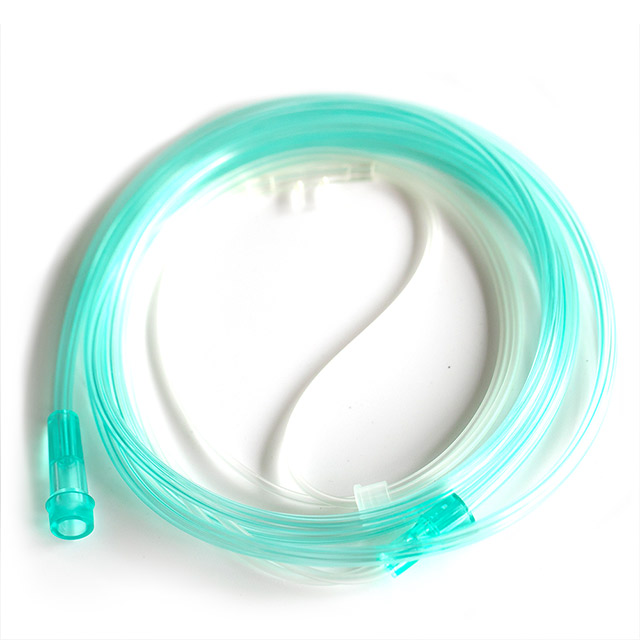
-A sudur kanala is one of the most common and recognizable Oxigenoa entregatzeko gailuak. It’s not a mask at all, but a flexible piece of toging with two small sudur prongs hura fit into the nostrils. The tube then loops over the ears and is secured under the chin. Its primary advantage is comfort and convenience. Patients can talk, eat, and drink while receiving mild oxygen therapy, which makes it ideal for long-term use of oxygen.
A sudur kanala a Fluxu txikia device, typically used for Fluxu-tasa settings between 1 and 6 liters per minute (LPM). This delivers an Oxigeno kontzentrazioa of approximately 24% to 44%. Because the patient also breathes in gela inguruan zirunik jota openings, the exact concentration can vary. A sudur kanala is the perfect choice for patients who are stable, not in acute distress, and require a modest increase in their Oxigeno maila. We manufacture various types, including a Disposable PVC nasal oxygen cannula for both infants and adults, designed for comfort and reliable performance. The simplicity of the nasal device makes it a staple in nearly every healthcare setting.
The Simple Face Mask: A Step Up in Oxygen Delivery
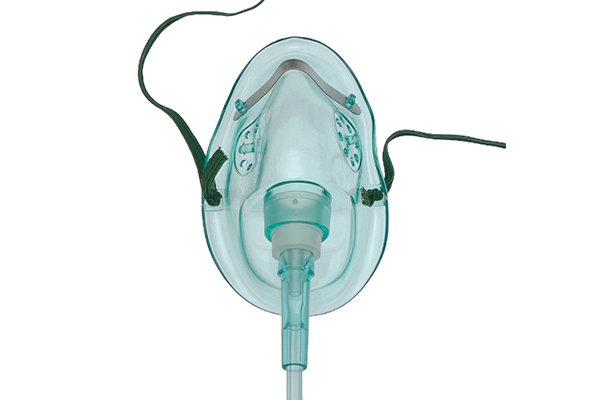
When a patient needs a slightly Oxigeno handiagoa concentration baino sudur kanala can provide, the next step is often the simple face masks. This is a lightweight, clear plastic mask that covers the nose and mouth and is held in place with an elastic strap around the head. It has small holes on the sides that allow aireztatutako airea to escape and also let the patient draw in some gela.
Simple face masks erabiltzen dira Fluxu-tasa settings between 6 and 10 LPM, delivering an Oxigeno kontzentrazioa of about 40% to 60%. It’s important not to use a Fluxu-tasa below 6 LPM with this mask is designed, as it can lead to a buildup of carbon dioxide from the patient’s own uhalizazio. Hauek masks are commonly used for patients who need short-term Oxigeno terapia, for example, during post-operative recovery or in an emergency transport situation. They provide a higher and more reliable Oxigeno fluxua than a cannula but are less precise than more advanced masks.
The Venturi Mask: For Precise Oxygen Concentration
-A Venturi mask, also known as an air-entrainment mask, is the go-to device when a Mediku profesionala needs to deliver a precise oxygen concentration. This is particularly critical for patients with Burbitz. For these individuals, receiving too much oxygen can suppress their natural drive to breathe, which is dangerous. The Venturi mask solves this problem with a clever design.
-A Venturi mask works by using a special balbula or a color-coded adapter at the base of the mask. As oxigeno flows at a high velocity through a narrow opening in the adapter, it creates a vacuum that pulls in (entrain) a specific amount of gela. Each color-coded Venturi adapter is designed to mix the Oxigeno hornidura with air to achieve a fixed, reliable concentration (e.g., 24%, 28%, 35%, 40%, 50%), regardless of the patient’s breathing pattern. This precision makes the Venturi a vital tool in managing chronic arabar conditions and preventing complications from Oxigeno terapia.
The Non-Rebreather Mask: Delivering High Oxygen in Critical Situations
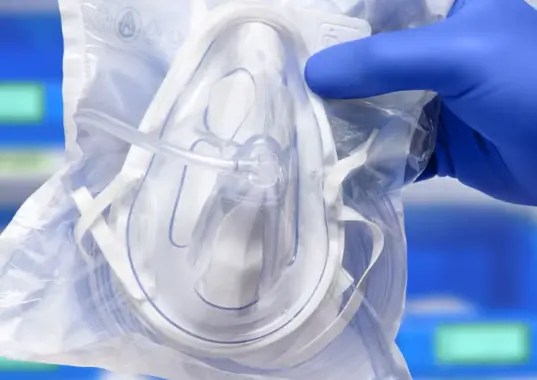
When a patient is in zoli distress and requires the highest possible Oxigeno kontzentrazioa, healthcare providers turn to the Ez-mozteko maskara. Hau type of oxygen mask is a critical piece of equipment in emergency medicine, resuscitation, eta critical care. -A Ez-mozteko maskara covers the nose and mouth and includes a large urtegiko poltsa attached to the bottom.
-A mask is designed with a series of one-way valves. One balbula sits between the mask and the urtegiko poltsa, allowing the patient to breathe in pure oxigeno from the bag but preventing their exhaled breath from going back in. Other one-way valves are located on the exhalation ports on the sides of the mask, allowing aireztatutako airea to escape but preventing gela from being inhaled. This system of one-way valves ensures that the patient is breathing almost 100% oxigeno. -A Ez-rebreather is used for high Fluxu-tasa settings (10-15 LPM) and can deliver an Oxigeno kontzentrazioa of up to 95%. These masks are often a bridge to more advanced arabar support like a BiPAP machine or mechanical ventilation.
What is a Partial Rebreather Mask and How Does it Differ?
The partial rebreather mask looks very similar to a Ez-mozteko maskara, as it also has a urtegiko poltsa. However, there is a key difference in its design and function. The partial rebreather does not have a one-way balbula between the mask and the urtegiko poltsa. This means that when the patient exhales, the first part of their breath—which is rich in oxigeno from the anatomical dead space of the aire bide-urma—flows back into the urtegiko poltsa and mixes with the pure oxigeno from the supply.
This design allows the patient to "re-breathe" some of their own used oxygen, conserving the supply while still delivering a high concentration. A partial rebreather mask can deliver an Oxigeno kontzentrazioa of 60% to 80% at a Fluxu-tasa of 6 to 10 LPM. It provides a Oxigeno handiagoa concentration baino simple face masks baina baino gutxiago Ez-rebreather. Hauek masks are used for patients who need Kontzentrazio handiagoak -ren oxigeno but are not in critical arabar failure. The choice between a Ez-rebreather and a partial rebreather depends on how much oxygen -a gaixoa condition demands.
How Do Healthcare Professionals Choose the Right Oxygen Delivery Device?
Choosing the right oxygen device is a clinical decision based on a thorough patient assessment. Healthcare professionals consider several factors to match the device to the patient’s needs for effective oxigenazio.
- Oxygen Requirement: The primary factor is the patient’s required Oxigeno kontzentrazioa. A patient with mild hypoxemia might start with a sudur kanala, while someone with severe Arnas ezinegona would immediately be placed on a Ez-mozteko maskara.
- Patient Condition and Stability: A stable patient with a chronic condition like Burbitz who needs precise, low-level oxigeno is a perfect candidate for a Venturi mask. An unstable patient in an emergency requires the high, immediate Oxigeno fluxua of a Ez-rebreather.
- Comfort and Tolerance: For patients requiring long-term Oxigeno terapia, comfort is key. A sudur kanala allows for more freedom than a full Oxigeno maskara, which can make some people feel claustrophobic.
- Breathing Pattern: The patient’s own breathing pattern can affect the Oxigeno kontzentrazioa delivered by Fluxu txikia devices like a sudur kanala or simple mask. For patients with irregular breathing, a high-flow or fixed-performance device like a Venturi mask is a better choice.
Common Challenges Patients Face When They Use an Oxygen Mask
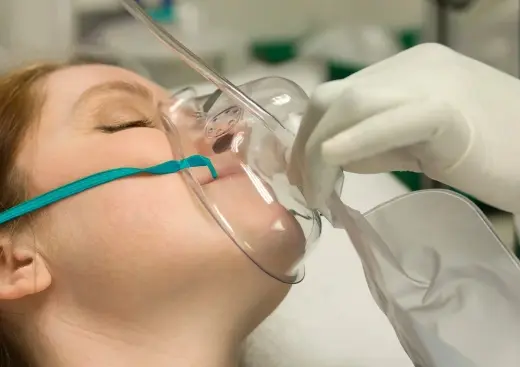
Une oxygen masks are essential -entzat used in the treatment of many conditions, they are not without challenges. From a design and manufacturing perspective, we are always working to improve comfort and usability. Patients can sometimes feel claustrophobic when a mask covers the nose and mouth. This can cause anxiety and may lead them to remove the mask, interrupting their Oxigeno terapia.
Skin irritation is another common issue. The pressure from the elastic strap and the mask itself can cause sores or redness, especially with long-term use. A dry nasal passage is a frequent complaint with the sudur kanala, as the continuous Oxigeno fluxua can be drying. To mitigate this, the oxigeno can be humidified. Ensuring a proper fit is also crucial; a mask that is too loose will leak oxigeno, reducing the effective concentration, while one that is too tight is uncomfortable. Creating a comfortable oxigeno device that delivers effective therapy is a constant goal. In a hospital setting, these challenges are managed alongside other critical care tasks, such as clearing the aire bide-urma a Xurgatzeko hodi konexioa.
From a Manufacturer’s View: What Defines a Quality Oxygen Mask?
As a manufacturer providing comprehensive respiratory care solutions, quality is embedded in every step of our process. When a hospital or distributor sources Oxigenoa entregatzeko gailuak, they are placing their trust in the product’s safety and performance.
A quality Oxigeno maskara ala sudur kanala is defined by:
- Medical-Grade Materials: The device must be made from soft, pliable, and hypoallergenic materials to minimize skin irritation and ensure patient comfort. All plastics must be non-toxic and odorless.
- Precision Engineering: For devices like the Venturi mask, adapters must be engineered to exact specifications to ensure they deliver a precise and reliable Oxigeno kontzentrazioa. -A balbaldak -an non-rebreathers must be high-quality to function correctly.
- Ergonomic Design: Ona mask is designed to create a secure but comfortable seal. Features like a flexible nose clip and soft, well-designed straps contribute to a better patient experience and better compliance with Oxigeno terapia.
- Clear and Durable Construction: The mask should be clear to allow healthcare providers to monitor the patient’s lips and nose. All connections for toging must be secure to prevent accidental disconnection from the Oxigeno hornidura.
The Future of Oxygen Delivery: Innovations in Respiratory Care
The field of arabar care is constantly evolving. While the basic Oxigeno maskara motak discussed here remain the foundation of Oxigeno terapia, innovation continues to improve patient outcomes and comfort. High-flow nasal cannula (Hfnc) systems, for example, can deliver heated and humidified oxigeno at very high flow rates, providing better oxigenazio and comfort than traditional masks for certain patients requiring this level of support.
Smart technology is also entering the space, with sensors that can monitor a patient’s breathing and automatically adjust the Oxigeno fluxua. The goal is always to provide the most effective and least invasive therapy possible. As manufacturers, we are committed to being part of this innovation, working with Osasun arloko profesionalak to develop the next generation of Oxigenoa entregatzeko gailuak that are safer, more comfortable, and more effective for the various types of oxygen therapy needed in modern medicine.
Takeaways gakoak
- Sudur kanala: For comfortable, low-flow oxygen (1-6 LPM), ideal for stable patients.
- Aurpegi maskara sinplea: For moderate Oxigeno kontzentrazioak (40-60%) at a Fluxu-tasa of 6-10 LPM.
- Venturi maskara: The best choice for delivering a precise oxygen concentration, crucial for Burbitz patients.
- Ez-mozteko maskara: - emergency device for delivering the highest possible Oxigeno kontzentrazioa (up to 95%) in critical situations.
- Rebreather maskara partziala: Delivers high oxigeno (60-80%) and conserves some oxigeno by allowing the patient to re-breathe the initial part of their exhaled breath.
- The Right Choice is Clinical: -A type of oxygen mask used is determined by the patient’s specific medical needs, condition, and comfort.
Post time: Dec-17-2025